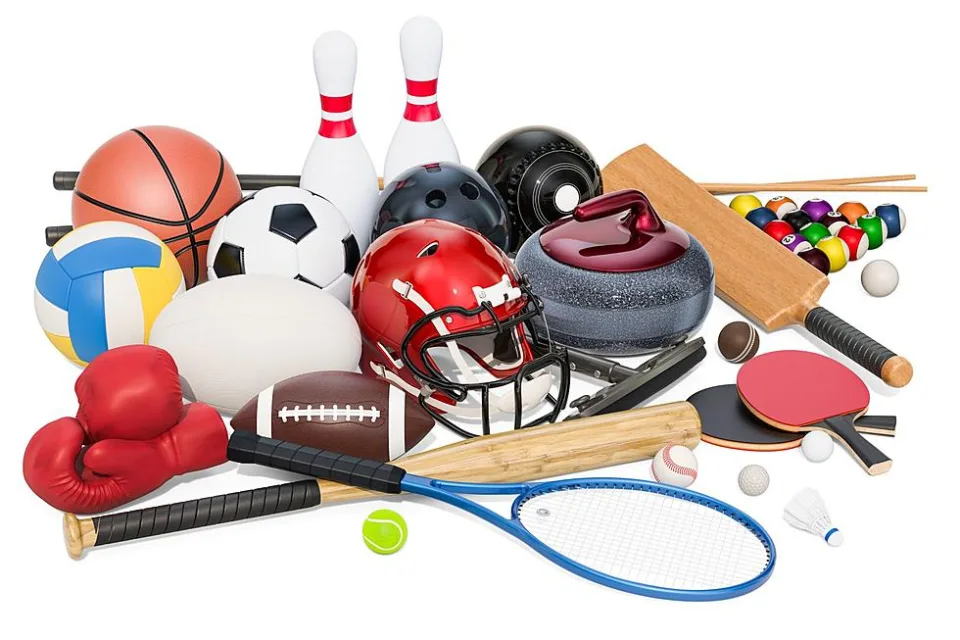
Choosing the Right Sports Gear: A Comprehensive Comparison Guide
Introduction: Elevating Your Athletic Performance with the Right Equipment
In the dynamic world of sports, the right equipment isn't just about comfort; it's a critical component that directly influences performance, safety, and enjoyment. Whether you're a seasoned athlete striving for a personal best or a beginner taking your first steps into a new discipline, understanding the nuances of sports gear can make a significant difference. This guide delves into a comparative analysis of various popular sports equipment categories, offering insights to help you make informed decisions. We will explore different types of gear within key sports, highlighting their unique features, benefits, and considerations for selection. Our aim is to empower you with the knowledge to choose the equipment that best suits your individual needs, goals, and the specific demands of your chosen sport.
Running Shoes: The Foundation of Every Stride
Running is a discipline that relies heavily on the footwear chosen. The right running shoes can prevent injuries, enhance comfort, and improve efficiency. However, the market is flooded with options, making the selection process daunting. We'll compare the primary categories of running shoes to help you find your perfect match.
Types of Running Shoes
- Neutral Running Shoes: Designed for runners with a neutral pronation, meaning their foot rolls inward slightly to absorb shock. These shoes offer cushioning and flexibility without significant motion control features.
- Stability Running Shoes: Ideal for runners who overpronate, where the foot rolls inward excessively. These shoes incorporate features like medial posts or guide rails to help control pronation and provide a more stable ride.
- Motion Control Running Shoes: Built for severe overpronators or heavier runners who need maximum support. They offer the most rigid structure and support to limit excessive foot motion.
- Trail Running Shoes: Engineered for off-road running, these shoes feature aggressive outsoles for superior grip on uneven terrain, enhanced durability, and often water-resistant uppers.
- Minimalist/Barefoot Running Shoes: Mimic the feeling of running barefoot with minimal cushioning and support. They encourage a more natural foot strike and gait but require a gradual adaptation period.
Comparison Table: Running Shoes
| Feature | Neutral Running Shoes | Stability Running Shoes | Motion Control Running Shoes | Trail Running Shoes | Minimalist Running Shoes |
|---|---|---|---|---|---|
| Ideal For | Neutral pronation, supination | Mild to moderate overpronation | Severe overpronation, heavier runners | Off-road, trail running | Natural foot strike, experienced runners |
| Support Level | Low to moderate cushioning | Moderate support and cushioning | High support and rigidity | Grip-focused, protective | Minimal support and cushioning |
| Key Benefits | Comfort, flexibility, shock absorption | Pronation control, stability, injury prevention | Maximum stability, injury prevention for severe overpronators | Traction, protection, durability on rough terrain | Enhanced ground feel, natural gait, foot strengthening |
| Considerations | May not be suitable for overpronators | Can feel restrictive for neutral runners | Can be heavy and less flexible | Less ideal for road running, can be less comfortable on pavement | Requires careful adaptation, higher risk of injury if not accustomed |
Cycling Helmets: Safety First, Style Second
Cycling, whether for recreation, fitness, or competition, carries inherent risks. A high-quality cycling helmet is non-negotiable for protecting your most vital asset. The differences between helmet types, while seemingly minor, can impact comfort, ventilation, and the level of protection offered.
Types of Cycling Helmets
- Road Cycling Helmets: Lightweight, aerodynamic, and designed for maximum ventilation. They typically feature a more compact profile and fewer vents compared to mountain bike helmets.
- Mountain Bike (MTB) Helmets: Offer more coverage, especially at the back of the head, and often include a visor to shield from sun and debris. They tend to have more ventilation to cope with strenuous climbs.
- Commuter Helmets: Prioritize visibility and everyday comfort. They may incorporate integrated lights, reflective elements, and a more casual aesthetic.
- Time Trial/Triathlon Helmets: Highly aerodynamic, with a more elongated shape and often a visor. Their primary focus is on reducing drag for speed-focused events.
Comparison Table: Cycling Helmets
| Feature | Road Cycling Helmets | Mountain Bike (MTB) Helmets | Commuter Helmets | Time Trial/Triathlon Helmets |
|---|---|---|---|---|
| Primary Use | Paved roads, racing, fitness riding | Off-road trails, downhill, cross-country | Urban commuting, casual riding | Competitive racing, time trials, triathlons |
| Coverage | Standard head coverage | Extended rear and side coverage | Standard head coverage, often with added visibility features | Aerodynamic profile, full head coverage |
| Ventilation | High, numerous vents for airflow | Good, designed for cooling during exertion | Moderate, balanced with safety and visibility features | Lower, prioritized for aerodynamics over maximum airflow |
| Visor | Typically no visor or a small, removable one | Usually includes a prominent visor | May or may not include a visor | Typically no visor, or an integrated face shield |
| Aerodynamics | Good, designed for efficiency | Moderate, less emphasis on pure aerodynamics | Basic, not a primary focus | Excellent, designed to minimize drag |
| Key Benefits | Lightweight, excellent ventilation, speed-focused design | Increased protection, debris shield, comfort on rough terrain | Enhanced visibility, comfort, practicality for daily use | Significant aerodynamic advantage, speed enhancement |
| Considerations | Less coverage than MTB helmets | Can be bulkier and less aerodynamic than road helmets | May not offer the highest level of performance features | Limited ventilation, can be uncomfortable in hot weather, requires specific riding position |
Strength Training Equipment: Building Muscle and Power
Strength training is fundamental for athletes across all disciplines, improving power, endurance, and injury prevention. The choice of equipment can significantly alter the training stimulus and the types of exercises you can perform.
Types of Strength Training Equipment
- Free Weights (Dumbbells, Barbells, Kettlebells): Offer a wide range of motion and require stabilizing muscles to work harder, promoting functional strength.
- Resistance Bands: Portable, versatile, and provide variable resistance. They are excellent for warm-ups, rehabilitation, and adding resistance to bodyweight exercises.
- Weight Machines: Provide guided movements, isolating specific muscle groups. They are often safer for beginners and allow for heavier lifting with less risk of injury.
- Bodyweight Training Equipment (Pull-up Bars, Dip Stations): Utilize your own body weight as resistance, offering a challenging and effective way to build strength and muscle.
Comparison Table: Strength Training Equipment
| Feature | Free Weights (Dumbbells, Barbells, Kettlebells) | Resistance Bands | Weight Machines | Bodyweight Training Equipment |
|---|---|---|---|---|
| Primary Benefit | Functional strength, muscle activation, versatility | Portability, versatility, joint-friendly resistance | Muscle isolation, safety, progressive overload | Body control, core strength, accessibility |
| Range of Motion | Full, natural range of motion | Variable, depending on band tension and anchor point | Fixed, guided path of motion | Full, dependent on exercise and individual flexibility |
| Muscle Engagement | Engages stabilizer muscles significantly | Engages stabilizer muscles, can mimic natural movements | Primarily targets specific muscle groups, less stabilizer engagement | Engages multiple muscle groups, strong core activation |
| Portability | Low to moderate (depending on weight) | High | Very low (typically gym-based) | Moderate (pull-up bars can be mounted) |
| Learning Curve | Moderate to high (requires proper form) | Low to moderate | Low to moderate (machines are intuitive) | Moderate (requires understanding of body mechanics) |
| Best For | Intermediate to advanced trainees, compound movements | Beginners, travelers, warm-ups, rehabilitation, accessory work | Beginners, rehabilitation, targeting specific muscle weaknesses | All levels, building foundational strength and body control |
| Considerations | Requires proper form to avoid injury, can be expensive | Resistance can be harder to quantify precisely, durability varies | Can be less functional for real-world strength, limited movement patterns | Requires creativity for progressive overload, limited by body weight |
Team Sports Balls: The Heart of the Game
For team sports enthusiasts, the ball is the central piece of equipment. Different sports demand balls with distinct characteristics in terms of size, weight, material, and grip, all of which profoundly affect gameplay.
Types of Team Sports Balls
- Soccer Balls: Typically made of synthetic leather or polyurethane, designed for aerodynamic flight and predictable bounce on grass.
- Basketballs: Characterized by their pebbled surface for grip and bounce, usually made of leather or composite materials.
- Volleyballs: Lighter and softer than basketballs, with a synthetic leather cover to reduce sting on impact.
- American Footballs: Distinctive oval shape with laces for grip, made of leather or composite materials, designed for throwing and catching.
- Baseball/Softball Balls: Small, hard spheres with a cork or rubber center, tightly wound with yarn and covered in leather.
Comparison Table: Team Sports Balls
| Feature | Soccer Ball | Basketball | Volleyball | American Football | Baseball/Softball Ball |
|---|---|---|---|---|---|
| Primary Sport | Soccer | Basketball | Volleyball | American Football | Baseball/Softball |
| Shape | Spherical | Spherical | Spherical | Oval (prolate spheroid) | Spherical |
| Surface Texture | Smooth, often panelled | Pebbled for grip | Smooth, often with dimples | Laced for grip, often pebbled | Leather cover, tightly stitched |
| Weight (approx.) | 14-16 oz (400-450g) | 20-22 oz (567-624g) | 8-10 oz (225-280g) | 14-15 oz (397-425g) | 5-5.25 oz (142-149g) for baseball; 6.25-7 oz (177-198g) for softball |
| Bounce/Rebound | Moderate, predictable on grass | High, responsive on hard courts | Moderate, controlled bounce | Low, designed for carrying and throwing | Very low, designed for hitting and pitching |
| Grip Focus | Aerodynamic flight | Hand grip for dribbling and shooting | Light touch for passing and spiking | Finger grip on laces for throwing accuracy | Firm grip for pitching and fielding |
| Material | Synthetic leather, polyurethane | Leather, composite leather | Synthetic leather | Leather, composite | Leather cover, yarn winding, cork/rubber core |
Outdoor Recreation Footwear: Exploring the Wilderness
For those who prefer their sports to take place amidst nature, the right footwear is crucial for comfort, support, and protection against the elements and varied terrain.
Types of Outdoor Recreation Footwear
- Hiking Boots: Offer ankle support and rugged soles for challenging trails. They come in various heights and levels of waterproofing.
- Trail Running Shoes: As discussed earlier, these are optimized for speed and agility on natural surfaces.
- Water Shoes: Designed for water sports, offering protection and grip in wet environments while allowing water to drain.
- Approach Shoes: A hybrid between hiking shoes and climbing shoes, offering excellent grip on rock and good support for hiking to climbing areas.
Comparison Table: Outdoor Recreation Footwear
| Feature | Hiking Boots | Trail Running Shoes | Water Shoes | Approach Shoes |
|---|---|---|---|---|
| Primary Use | Multi-day hikes, backpacking, rough terrain | Fast-paced trail running, light hiking | Kayaking, canyoneering, beach activities, river trekking | Hiking to climbing spots, scrambling, light climbing |
| Ankle Support | High (mid to high cut) | Low (low cut) | Very low (low cut) | Moderate (low to mid cut) |
| Sole Grip | Aggressive lugs for traction on varied surfaces | Aggressive lugs for traction on dirt and rock | Sticky rubber for wet surfaces, drainage ports | Sticky rubber, often with climbing zones for edging |
| Protection | Excellent (toe caps, ankle support, waterproofing) | Good (toe protection, durable uppers) | Moderate (protects from sharp objects underwater) | Good (toe protection, durable materials) |
| Flexibility | Stiffer for support on uneven ground | Flexible for natural foot movement | Flexible for comfort and agility in water | Moderate, balance of flexibility and rigidity |
| Water Resistance | Often highly waterproof (Gore-Tex, etc.) | Varies; some waterproof, some breathable | Designed to get wet and dry quickly | Varies; some water-resistant, some breathable |
| Considerations | Can be heavy and require break-in period | Less ankle support than boots | Limited support for long hikes or rough terrain | Less cushioning than hiking boots for long distances |
Conclusion: Making the Smart Choice for Your Sporting Journey
The world of sports equipment is vast and diverse, offering specialized tools for every activity and athlete. By understanding the fundamental differences between various types of gear, as outlined in this comparative guide, you are better equipped to make choices that align with your specific needs, skill level, and sporting aspirations. Whether you're investing in running shoes for your next marathon, a helmet for your cycling adventures, or the right ball for your team sport, prioritizing quality, functionality, and safety will undoubtedly enhance your experience and performance. Remember that proper fit and personal preference play a significant role, so always try on equipment when possible and consult with knowledgeable professionals if you have specific concerns. Your journey in sports is a continuous one, and the right equipment is a faithful companion that will support you every step of the way.

