The Ultimate Guide to Choosing the Perfect Toys: A Comparison of Popular Categories
In the vibrant and ever-evolving world of toys, selecting the right playthings for children can feel like navigating a delightful labyrinth. From sparking imagination to fostering crucial developmental skills, toys play an instrumental role in a child's growth. This comprehensive guide delves into a comparison of popular toy categories, offering insights and tips to help you make informed decisions, ensuring every playtime is both enjoyable and beneficial.
Understanding the Power of Play: Why Toy Selection Matters
Before we dive into specific categories, it's essential to understand the profound impact toys have on a child's development. Play is not merely a pastime; it's a fundamental learning process. Toys act as catalysts, enabling children to explore, experiment, and understand the world around them. They contribute to:
- Cognitive Development: Problem-solving, critical thinking, memory, and language skills are all honed through play.
- Social and Emotional Development: Sharing, turn-taking, empathy, and emotional regulation are learned through interactive play.
- Physical Development: Fine and gross motor skills are enhanced through activities involving manipulation, movement, and coordination.
- Creativity and Imagination: Open-ended toys encourage children to invent stories, scenarios, and unique ways of interacting with their environment.
With this understanding, let's explore some of the most popular and impactful toy categories, comparing their unique strengths and suitability for different age groups and developmental goals.
Category 1: Building Blocks and Construction Toys
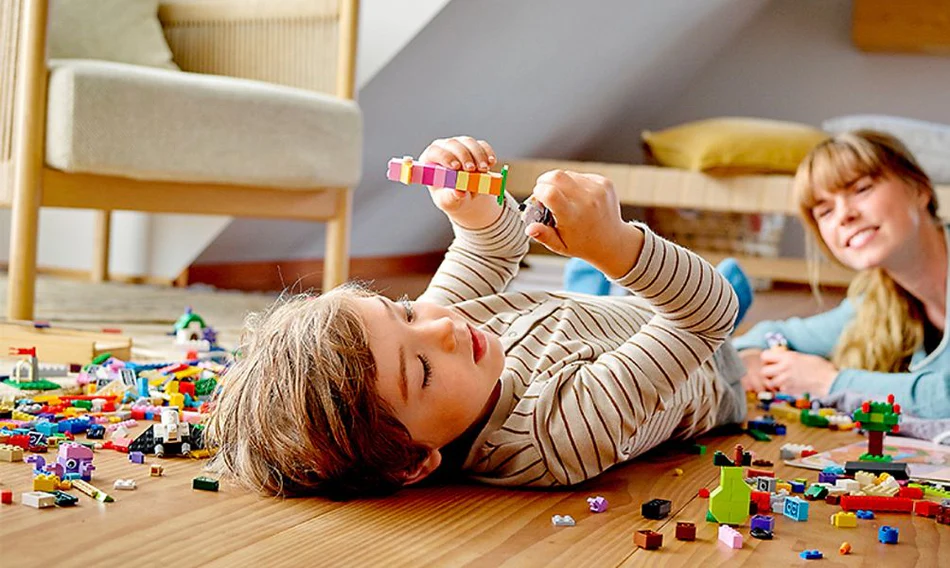
Building blocks, in their myriad forms, have stood the test of time as a cornerstone of childhood play. From simple wooden blocks to intricate interlocking systems, these toys offer boundless opportunities for creativity and skill development.
Types of Building Toys:
- Classic Wooden Blocks: Timeless, versatile, and safe, these offer a tactile experience and encourage open-ended building.
- Interlocking Plastic Bricks (e.g., Stud-and-Tube Systems): These popular sets allow for complex structures, fostering fine motor skills and spatial reasoning. They often come with detailed instructions for specific models or allow for free-form construction.
- Magnetic Building Tiles: These offer a unique way to build, as magnets connect the pieces. They are excellent for younger children to grasp basic principles of construction and stability.
- Engineering and STEM Kits: These go beyond simple stacking, often incorporating gears, pulleys, and electrical components to teach fundamental engineering and science concepts.
Pros:
- Develops Fine Motor Skills: Manipulating small pieces and connecting them strengthens hand-eye coordination and dexterity.
- Enhances Spatial Reasoning: Children learn to visualize and create three-dimensional structures.
- Fosters Problem-Solving: Figuring out how to make a structure stable or achieve a desired shape encourages critical thinking.
- Promotes Creativity and Imagination: The possibilities are endless, allowing children to build anything they can envision.
- Scalable Complexity: Available in simple sets for toddlers and complex kits for older children and adults.
Cons:
- Can be Frustrating: Complex sets might require adult assistance or lead to frustration if children are not ready for the challenge.
- Potential for Small Parts: Many interlocking systems contain small pieces that can be a choking hazard for very young children.
- Storage: Large collections can require significant storage space.
Who are they best for?
Building blocks are ideal for a wide age range, from toddlers just learning to stack to older children engaged in complex engineering projects. They are particularly beneficial for children who enjoy hands-on activities, problem-solving, and creative expression.
Category 2: Pretend Play and Role-Playing Toys
Pretend play is crucial for social and emotional development, allowing children to explore different roles, scenarios, and emotions in a safe and imaginative environment.
Types of Pretend Play Toys:
- Dress-Up Clothes and Accessories: Costumes, hats, wands, and jewelry allow children to transform into characters.
- Play Kitchens and Food: These encourage imaginative cooking, serving, and social interaction.
- Dollhouses and Action Figures: These provide settings and characters for children to create narratives and explore relationships.
- Doctor Kits, Toolkits, and Career-Focused Toys: These allow children to mimic adult professions and understand different roles in society.
- Puppets: A versatile tool for storytelling, performance, and emotional expression.
Pros:
- Boosts Social and Emotional Skills: Children learn empathy, cooperation, negotiation, and conflict resolution by acting out different roles and interacting with others.
- Develops Language and Communication: Pretend play encourages children to use language to create stories, express ideas, and communicate with peers.
- Fosters Imagination and Creativity: Children invent scenarios, characters, and dialogues, stretching their imaginative capabilities.
- Helps Process Emotions: By role-playing, children can explore and understand different emotions and situations.
- Builds Confidence: Taking on different roles can help children feel more confident and capable.
Cons:
- Can be Messy: Some pretend play scenarios, like playing with play food or doctor kits, can involve many small pieces.
- Requires Space: Larger items like play kitchens or dollhouses can take up considerable space.
- Can be Limited by Props: While imagination is key, the availability of specific props can sometimes guide or limit the play.
Who are they best for?
Pretend play toys are excellent for children of all ages, particularly those who are social, enjoy storytelling, and are developing their understanding of the world and human interactions. They are invaluable for fostering emotional intelligence.
Category 3: Educational and STEM Toys
In an increasingly technology-driven world, STEM (Science, Technology, Engineering, and Mathematics) toys are gaining prominence for their ability to introduce complex concepts in an engaging and accessible way.
Types of Educational and STEM Toys:
- Coding Robots: These introduce basic programming concepts through interactive play.
- Science Experiment Kits: From chemistry sets to crystal growing kits, these allow children to explore scientific principles hands-on.
- Math Manipulatives: Tools like pattern blocks, fraction tiles, and counting bears help visualize and understand mathematical concepts.
- Puzzles and Logic Games: These challenge problem-solving skills and logical thinking.
- Microscopes and Telescopes: These introduce children to the wonders of the natural world and the cosmos.
Pros:
- Develops Critical Thinking and Problem-Solving: STEM toys often present challenges that require logical deduction and experimentation.
- Introduces Core Academic Concepts: Makes learning about science, technology, engineering, and math fun and intuitive.
- Encourages Curiosity and Inquiry: These toys often prompt children to ask "why" and "how."
- Prepares for Future Careers: Early exposure to STEM concepts can spark an interest in related fields.
- Hands-on Learning: Provides a tangible way to understand abstract concepts.
Cons:
- Can be Expensive: Some advanced STEM kits can be a significant investment.
- May Require Adult Guidance: Certain experiments or coding activities might need adult supervision or assistance.
- Risk of Frustration: If the concepts are too advanced or the instructions unclear, children might become discouraged.
- Can be Single-Purpose: Some STEM toys are designed for very specific learning outcomes, limiting their open-ended play potential compared to blocks or dolls.
Who are they best for?
These toys are ideal for curious children who enjoy problem-solving, experimentation, and learning about how things work. They are excellent for fostering an early interest in academic subjects and developing analytical skills.
Category 4: Art and Craft Supplies
Art and craft supplies are fundamental for nurturing creativity, self-expression, and fine motor skills. They provide an outlet for children to translate their inner worlds into tangible creations.
Types of Art and Craft Supplies:
- Drawing and Coloring Tools: Crayons, colored pencils, markers, chalk.
- Painting Supplies: Watercolors, tempera paints, acrylic paints, brushes, canvases, paper.
- Modeling Clay and Play-Doh: For sculpting and creating three-dimensional art.
- Craft Kits: Bead kits, sticker mosaics, paper craft sets, DIY jewelry making.
- Collage Materials: Scissors, glue, construction paper, magazines, fabric scraps.
Pros:
- Enhances Creativity and Self-Expression: Provides a direct channel for children to express their thoughts, feelings, and imagination.
- Develops Fine Motor Skills: Activities like cutting, gluing, drawing, and sculpting refine hand-eye coordination and dexterity.
- Improves Concentration and Focus: Engaging in art projects requires sustained attention.
- Boosts Confidence: Completing an art project provides a sense of accomplishment.
- Therapeutic Benefits: Art can be a calming and stress-relieving activity.
Cons:
- Can be Messy: Painting, gluing, and using clay often require supervision and can lead to messes.
- Requires Materials: Continuous engagement means ongoing need for replenishing supplies.
- Can be Expensive: High-quality art supplies or extensive craft kits can add up.
- Potential for Frustration: Complex crafts might be challenging for younger children.
Who are they best for?
Art and craft supplies are perfect for children who are visually oriented, enjoy hands-on creative activities, and have a desire to make things. They are beneficial for all ages, with varying levels of complexity available.
Category 5: Active Play and Outdoor Toys
Encouraging physical activity is paramount for a child's health and well-being. Active play toys promote gross motor skills, coordination, and a healthy lifestyle.
Types of Active Play Toys:
- Balls: Soccer balls, basketballs, playground balls for throwing, kicking, and catching.
- Ride-on Toys: Scooters, tricycles, balance bikes, wagons for developing balance and coordination.
- Sports Equipment: Toy bats and balls, hockey sticks, frisbees for specific sports.
- Outdoor Exploration Tools: Magnifying glasses, bug nets, binoculars for nature discovery.
- Play Structures: Tents, tunnels, climbing structures for imaginative and physical play.
Pros:
- Promotes Physical Health: Encourages exercise, strengthens muscles, and improves cardiovascular health.
- Develops Gross Motor Skills: Crucial for coordination, balance, and agility.
- Boosts Energy Levels: Helps children expend excess energy, leading to better sleep.
- Encourages Outdoor Exploration: Connects children with nature and the environment.
- Social Interaction: Many active play activities are best enjoyed with others.
Cons:
- Requires Space: Many active play toys are best used outdoors or in large indoor spaces.
- Weather Dependent: Outdoor play can be limited by weather conditions.
- Safety Concerns: Proper supervision and age-appropriate equipment are essential to prevent injuries.
- Durability: Toys used outdoors may be subject to wear and tear.
Who are they best for?
These toys are essential for energetic children who love to move and explore. They are vital for promoting a healthy lifestyle and developing fundamental physical skills.
Making the Right Choice: Key Considerations
When selecting toys, several factors should guide your decision to ensure you're choosing the most appropriate and beneficial options:
Age Appropriateness:
This is the most critical factor. Toys should align with a child's developmental stage, cognitive abilities, and physical capabilities. Always check the recommended age range on the packaging, but also consider the individual child's maturity and interests.
Developmental Benefits:
Think about what skills you want to encourage. Do you want to foster creativity, problem-solving, physical coordination, or social interaction? Choose toys that actively support these developmental goals.
Safety:
Ensure toys are made from non-toxic materials, have no sharp edges, and do not contain small parts that could be a choking hazard for younger children. Look for certifications from reputable safety organizations.
Durability and Longevity:
Invest in toys that are well-made and can withstand repeated play. Toys that can be used in multiple ways or grow with the child offer better long-term value.
Child's Interests:
Ultimately, the most engaging toys are those that align with a child's individual passions and curiosities. Observe what captures their attention and tailor your choices accordingly.
Open-Ended vs. Closed-Ended Toys:
- Open-ended toys (e.g., blocks, art supplies) have no set way to be played with, encouraging imagination and creativity.
- Closed-ended toys (e.g., electronic games with specific objectives, puzzles with a single solution) have a defined purpose or outcome. While valuable for specific skill development, a good toy collection balances both.
A Comparative Table of Toy Categories
To summarize, here's a comparative look at the strengths of each category:
| Toy Category | Primary Developmental Focus | Key Skills Developed | Best For | Potential Drawbacks |
|---|---|---|---|---|
| Building Blocks & Construction | Cognitive, Fine Motor, Spatial Reasoning | Problem-solving, creativity, dexterity, spatial awareness | Children who enjoy hands-on building, logic, and open-ended play. | Can be messy, potential for small parts, storage needs. |
| Pretend Play & Role-Playing | Social-Emotional, Language, Imagination | Empathy, communication, storytelling, emotional regulation, confidence | Socially-inclined children, those who love storytelling and exploring emotions. | Can be messy, requires space, play can be guided by props. |
| Educational & STEM | Cognitive, Problem-Solving, Academic Foundations | Critical thinking, logic, scientific curiosity, math skills, coding basics | Curious children who enjoy puzzles, experiments, and understanding how things work. | Can be expensive, may require adult guidance, potential for frustration. |
| Art & Craft Supplies | Creativity, Fine Motor, Self-Expression | Imagination, dexterity, focus, self-confidence, emotional release | Visually-oriented children who enjoy creating and expressing themselves. | Can be messy, requires ongoing material purchase, potential for frustration with complex crafts. |
| Active Play & Outdoor | Gross Motor, Physical Health, Coordination | Balance, agility, coordination, healthy lifestyle, outdoor exploration | Energetic children who love to move, play sports, and explore the outdoors. | Requires space, weather-dependent, safety concerns, potential for wear and tear. |
Conclusion: Cultivating Joyful and Meaningful Play
The world of toys offers an incredible spectrum of possibilities, each category contributing uniquely to a child's development and happiness. By understanding the strengths and considerations of different toy types – from the foundational building blocks and imaginative pretend play to the intellectually stimulating STEM toys, creatively liberating art supplies, and health-promoting active play – you can curate a toy collection that fosters growth, sparks joy, and creates lasting memories. Remember to prioritize age-appropriateness, safety, and, most importantly, the individual child's interests to unlock the full potential of play.